Wellbeing in Polish IT. What do employers really promise in job ads?
Analysis of 976 job ads.
60.2%
Include any wellbeing language
43.9%
Offer at least one concrete benefit
16.3%
Use only soft, image-focused language
39.8%
Do not mention wellbeing at all
If you work in software, it is hard not to feel overwhelmed by the tone of today’s IT news. Layoffs, salary pressure, return-to-office mandates, and extreme work-culture narratives dominate the conversation. In that climate, quieter market signals are easy to miss — especially signals that show how employers communicate expectations and support.
This article looks at one such signal: job ads. We analyze whether and how Polish IT employers mention wellbeing, mental health, and benefits related to comfort, flexibility, and work-life balance. Job ads are not the full reality of work inside organizations, but they are still an important lens into what companies choose to promise and prioritize at the very first stage of hiring.
Methodology
This is an exploratory analysis of 976 IT job ads published in Polish job portals. We coded statements into two broad groups: hard benefits (for example private healthcare, flexible hours, home office support, direct mental health support) and softer employer-branding declarations (for example positive atmosphere, people-first culture, and supportive environments).
Wellbeing appears often, but not always with substance.
In the sample, 60.2% of ads include some wellbeing-related language. Of those, 43.9% include at least one concrete benefit, while 16.3% rely only on soft, image-oriented wording. The remaining 39.8% do not mention wellbeing at all.
Two conclusions stand out. First, wellbeing is clearly mainstream in IT hiring language, but not yet a universal market standard. Second, among companies that do mention wellbeing, concrete offers are more common than purely decorative claims.
What employers mean by wellbeing
In practice, wellbeing most often means convenience, flexibility, and conditions that make day-to-day work easier.
| Category | Share |
|---|---|
| Friendly team / positive atmosphere | 46.5% |
| Flexible work arrangements | 43.2% |
| Work-life balance | 40.6% |
| Private healthcare | 39.6% |
| Sport / physical activity / wellness | 34.2% |
| Financial wellbeing | 25.5% |
| Mental health support | 13.5% |
| Ergonomic home office equipment | 13.5% |
| Additional paid leave | 11.5% |
| Wellbeing platform access | 8.2% |
It is also worth noting that terms like “team culture” or “atmosphere” are soft signals. They are hard to verify and even harder to treat as a measurable benefit. Still, their prevalence indicates that employers know candidates expect a supportive environment and that this expectation needs to be addressed.
Mental health: present, still peripheral
Employers often promise a positive work environment, but they are much less likely to explicitly offer psychological consultations, therapy access, or anti-burnout programs. This low visibility can signal market immaturity, but also communication caution: mental health is still treated as reputationally sensitive, despite being highly relevant to modern IT work conditions.
Wellbeing is rarely the central value proposition
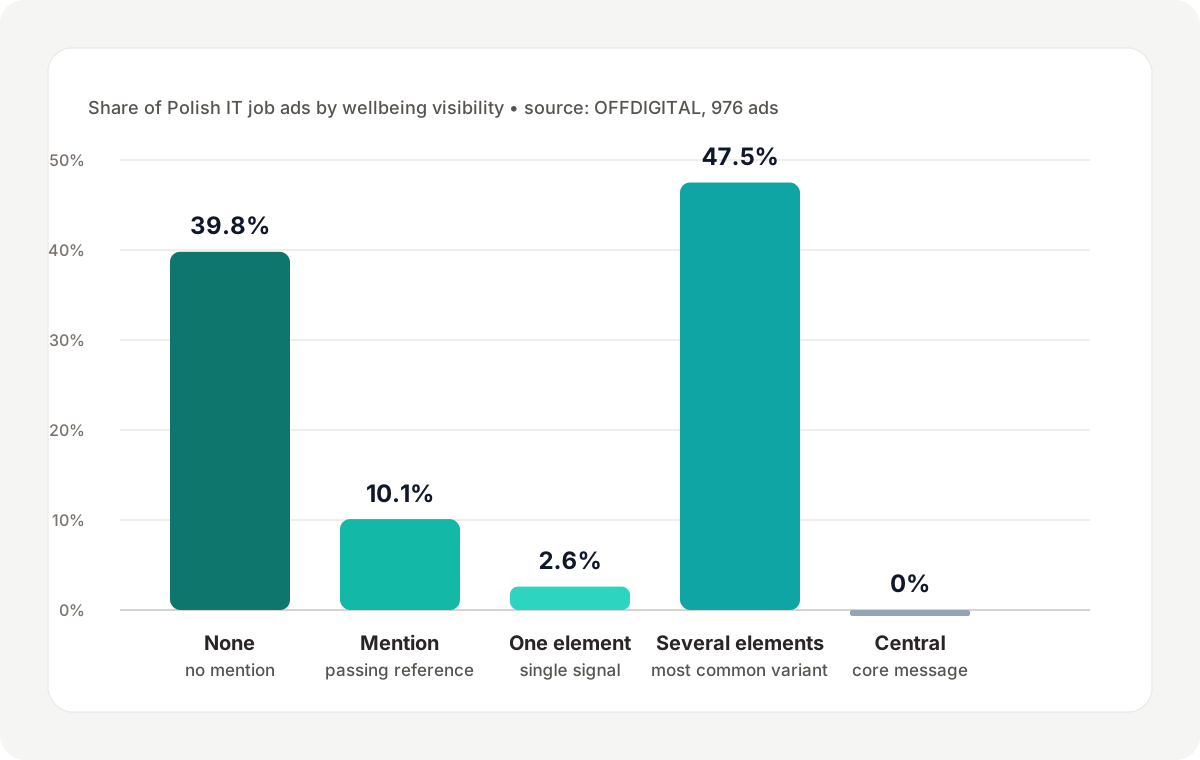
Even when wellbeing appears in job ads, it is usually an add-on element, not the core narrative of the offer. Nearly half of ads mention multiple wellbeing elements, yet none place wellbeing at the center of their value proposition.
What does this say about market maturity?
The Polish IT market appears mature in language, but selective in depth. Wellbeing is no longer niche; it is part of mainstream employer communication. At the same time, communication remains strongest in areas that are easy to communicate and low-risk from a branding perspective.
In other words: wellbeing is normalized where it can be framed as an advantage, but less normalized where it requires open discussion of overload, burnout, and organizational responsibility.
Limitations
This analysis covers recruitment communication, not day-to-day employee experience after joining a company. It does not directly identify where people work well or poorly. It shows what companies choose to communicate to candidates.
What comes next
We plan to repeat this analysis quarterly to track market shifts over time. Future editions will also compare Poland with other countries to distinguish local communication patterns from broader international trends in how IT employers talk about wellbeing.
Summary
Wellbeing in Polish IT job ads shows that employers increasingly use wellbeing language, but usually as a safe package of benefits rather than a central value proposition. What employers really promise is mostly comfort and flexibility. Why mental health support still appears rarely is linked to cautious communication. Job ads reveal a mature employer branding vocabulary, but not yet mature direct communication about psychological support.
Key finding
60,2% ads use wellbeing language.
Key finding
13,5% mention mental health support directly.
Key finding
0% make wellbeing the central message.
Methodology
Exploratory analysis of 976 Polish IT job ads, coded into hard benefits and soft employer-branding declarations.
Why this matters for HR / EB / founders
The market now treats wellbeing language as baseline. Differentiation comes from credibility and concrete mental health support communication.
FAQ
What does wellbeing mean in Polish IT job ads?
Most often: flexibility, atmosphere, work-life balance and private healthcare, less often direct psychological support.
How often do employers mention mental health support?
In this sample of 976 ads, direct mental health support appears in 13.5% of postings.
Why do companies avoid explicit mental health language?
Because it can be seen as reputationally difficult; employers prefer safer benefit language over explicit overload and burnout framing.
What do job ads reveal about employer branding maturity?
They show mature wellbeing vocabulary, but still limited direct communication of mental health support.